
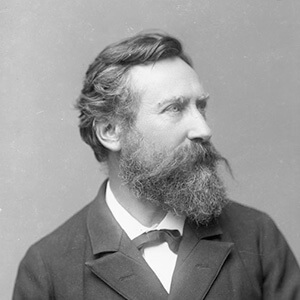
Albert Goullé
Albert Frédéric Goullé (1844–1918) was a French socialist, insurrectionary journalist, and prolific feuilletoniste who spent half a century proving that a writer can demand the immediate destruction of bourgeois society on page one while keeping that exact same society breathlessly hooked on a serialized courtroom melodrama on page four. Born in Normandy in 1844, Goullé cut his teeth as an opposition journalist under the Second Empire before finding his true element during the Siege of Paris. Unbothered by Prussian artillery or a diet of siege rations, he joined the Committee of the Twenty Arrondissements, put his name to the fiery Affiche Rouge of January 1871 demanding the creation of a Commune, and wrote regularly for Auguste Blanqui's La Patrie en danger and Jules Vallès's Le Cri du peuple.
His enthusiastic participation in the Paris Commune of 1871 earned him a conviction in absentia from the French authorities, a heavy-handed legal hint that inspired an extended sabbatical in London. While paying the bills across the Channel with the decidedly respectable day job of schoolteacher, Goullé kept his subversive credentials immaculate by joining the Blanquist group La Commune révolutionnaire. In 1874, he co-signed the manifesto Aux Communeux, a warm little dispatch from across the water explicitly billed as an "atheist, communist, and revolutionary declaration".
Once amnesty made Paris safe for returning firebrands, Goullé headed home to help launch the unapologetically titled newspaper Ni Dieu ni Maître (Neither God nor Master) in 1880 and co-founded the Central Revolutionary Committee with Édouard Vaillant in 1881. Rejoining the revived Le Cri du peuple as a lead editor alongside Vallès, Séverine, and Jules Guesde, he threw himself into the great French leftist pastime of ferocious newsroom factionalism. Despite his lifelong distrust of state institutions, he was never too proud to use a courtroom when his pride was pricked, famously hauling fellow ex-Communard Pierre Vésinier before a judge for defamation in 1892 over a book arguing about whose fault it was that the Commune fell.
Because revolutionary manifestos rarely appease Parisian landlords, Goullé spent the Third Republic moonlighting as an unstoppable serial novelist. When he wasn't covering labor strikes, he was churning out lurid, crowd-pleasing page-turners packed with poisonings, wrongful convictions, and swooning heroines. Between calls for proletarian uprising, readers devoured his literary contributions to pulp drama, including La Maison d'Auteuil (1890), M. Durlot, rentier (Mœurs ouvrières) (1894), Les Drames de la cour d'assises (1896), La Fille du supplicié (1897), L'Infanticide de Bellecombre, and the eyebrow-raising Médecin pour dames (Ladies' Doctor, 1903).
Never a plotter to shy away from a third-act twist, the man who spent forty years preaching uncompromising class warfare greeted World War I by rallying fervently to the nationalist Union sacrée. In 1915, at age seventy-one, the old barricade veteran published a pamphlet titled Cessons la lutte de classe ! (Let's Stop the Class Struggle!) and declared in Le Salut mondial that he had zero interest in being impartial while "Teutonic invaders" were at the gates, briskly tossing pacifists and cowards into the same rhetorical sack. Having survived an emperor, a siege, a bloodily suppressed commune, British weather, and decades of socialist committee meetings, Goullé died in Paris in December 1918 at age seventy-four, holding out just long enough after the Armistice to ensure he got the final word.